Island Hopping through the Aeolian Islands
Visited (self-confirmed) September 2026
Updated 2026-09-21 by Jan Paul Buchwald
The Aeolian Islands turned out to be one of the most diverse island destinations I have visited. Using Lipari as a base for five days, I explored six of the seven inhabited islands by combining hiking with the excellent ferry network and an organized boat excursion. Although the weather did not always cooperate, the constantly changing volcanic landscapes made every day feel different.
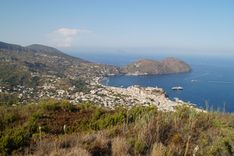
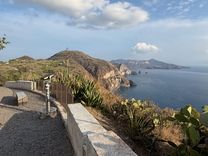
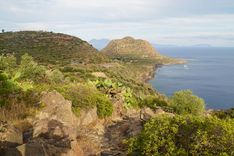
Lipari, the largest island of the archipelago, served as an ideal starting point. Several hikes revealed very different sides of the island, from the rugged cliffs around Punta della Crepazza and the panoramic viewpoints of Monte Guardia and Belvedere Quattrocchi to the quieter northern villages of Quattropani and Acquacalda. Crossing the island on foot also offered impressive coastal scenery before returning via Canneto. The historic centre of Lipari itself is well worth exploring, with the imposing Castello di Lipari, the outstanding Archaeological Museum, ancient necropolises and traces of Greek and Roman history spread throughout the fortified citadel.
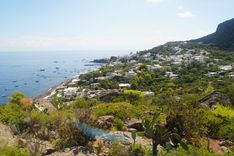
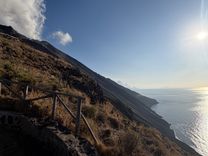
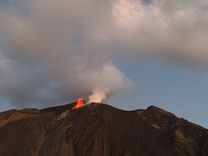
A full-day boat excursion combined Panarea and Stromboli, two islands with completely different characters. On Panarea, I used the short stop for a fast-paced hike that circled much of the island while climbing to higher viewpoints overlooking the surrounding sea and neighbouring islands. Stromboli offered a striking contrast with its black volcanic slopes and whitewashed village. From there I hiked to the highest viewpoint currently accessible without a guide before the excursion concluded with the highlight of the entire trip: watching Stromboli's regular eruptions from the sea at sunset as glowing lava rolled down the Sciara del Fuoco.
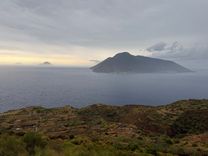
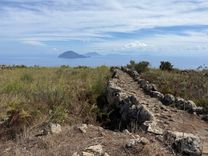
Another day was dedicated to the western islands. Alicudi, the most remote and least developed island of the archipelago, feels almost untouched by modern tourism. A steep hike to the central plateau and summit rewarded me with magnificent views over the sea and neighbouring islands. Nearby Filicudi is slightly larger but equally peaceful. Walking to Pecorini a Mare and the prehistoric village revealed another side of the archipelago, where archaeological remains and dramatic coastal scenery coexist in near solitude.
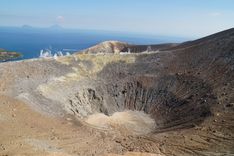
Before leaving the islands, I spent several hours on Vulcano, whose active volcanic landscape differs completely from the greener islands. Hiking around and up the crater provides spectacular views over the Aeolian Islands and Sicily, while the sulphur vents constantly remind visitors that volcanic activity remains very much alive. Afterwards I continued on foot across Vulcano Porto to Vulcanello, whose lava formations and coastal scenery provided a fitting conclusion before taking the ferry back to Sicily.
Overall, the Aeolian Islands exceeded my expectations. Despite their close proximity, every island has its own distinct landscape and atmosphere, ranging from fertile green hills and quiet villages to active volcanoes and dramatic black lava fields. Traveling by ferry and combining several moderate hikes proved to be an excellent way to experience the archipelago, making it one of the highlights of my travels in southern Italy.
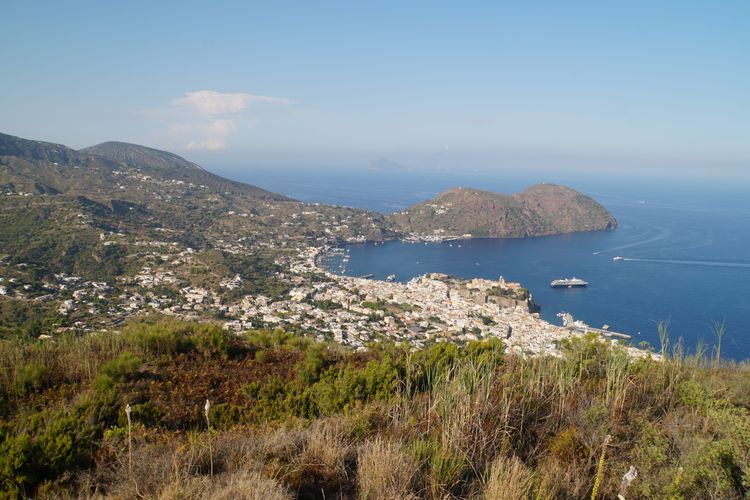
View on Lipari town