Mantua - Renaissance Palaces and the Legacy of the Gonzaga Family
Visited (self-confirmed) July 2026
Updated 2026-07-24 by Jan Paul Buchwald
Mantua (Mantova) proved to be one of the most rewarding day trips of my Northern Italy journey. Surrounded on three sides by artificial lakes and recognized as a UNESCO World Heritage Site, the city combines magnificent Renaissance architecture with a relaxed atmosphere and far fewer crowds than many of Italy's better-known destinations.
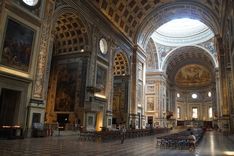
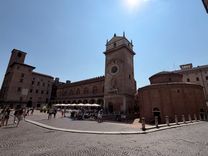
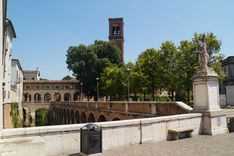
Starting in the historic centre, I explored Piazza delle Erbe, the heart of the city, where the elegant Basilica of Sant'Andrea, the medieval Palazzo della Ragione, and the circular Rotonda di San Lorenzo, one of the oldest churches in northern Italy, stand side by side. Climbing the clock tower of the Palazzo della Ragione provided a good overview of the city, while the temporary modern art exhibition inside created an interesting contrast to the historic setting.
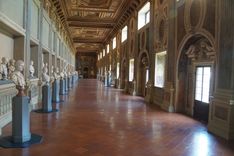
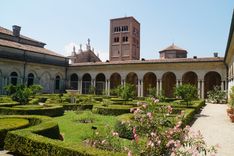
The undisputed highlight of the visit was the vast Palazzo Ducale, former residence of the powerful Gonzaga family. Exploring its numerous halls, apartments, courtyards, and galleries takes several hours and offers an impressive insight into one of the most influential Renaissance courts in Europe. The palace complex is so extensive that it feels almost like a small town within the city.
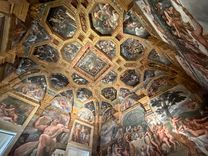
A walk across the city led to Palazzo Te, another masterpiece closely associated with the Gonzagas. Originally designed as a pleasure palace, it is particularly famous for its richly decorated rooms and illusionistic frescoes. On the way, I also briefly stopped at the Museo Tazio Nuvolari, dedicated to the legendary racing driver who was born in Mantua.
The afternoon continued with visits to the MACA – Palazzo San Sebastiano, displaying archaeological collections and the city's ancient heritage, and the nearby Tempio di San Sebastiano, one of Leon Battista Alberti's most influential Renaissance church designs.
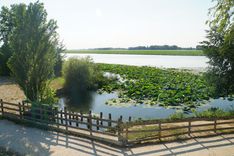
To round off the day, I followed the waterfront paths along the lakes surrounding Mantua. The views across the water toward the historic skyline provide a completely different perspective on the city and highlight its unique setting.
Overall, Mantua impressed me with its exceptional concentration of Renaissance architecture, magnificent palaces, and rich history. Despite its cultural importance, it remains pleasantly relaxed and can comfortably be explored in a full day, making it one of Northern Italy's most underrated historic cities.
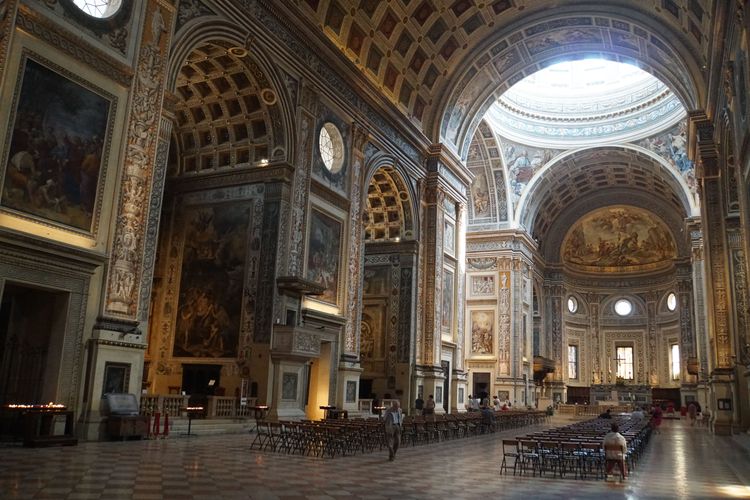
Basilica of Sant'Andrea